May 1, 2012
For years it’s been a widely known fact that gum disease not only contributes to heart disease, stroke and heart attacks, but it’s one of the main causes. But, according to a new scientific statement published in an American Heart Association medical journal, all these claims are false. The statement claims that gum disease hasn’t been proven to cause atherosclerotic heart disease and stroke and that treating gum disease hasn’t outwardly been proven to prevent heart disease or stroke.
Current data does not indicate whether or not regular brushing, flossing or treatment of gum disease can cut the chances of narrowing arteries – a leading cause of heart attacks and strokes. This “narrowing” is medically referred to as atherosclerosis. While observational studies have noted associations between gum disease and diseases affecting the heart, the 500 journal articles and studies reviewed by the committee didn’t confirm any kind of causative link.
Much of the current literature on the subject is conflicting; some claim the two are directly linked, while others state that while they are linked, the chances are increased through habits like smoking and poor diet and/or lack of exercise. In fact, a long-term study would have to be done to prove if dental disease causes heart disease and stroke, or if it has just been conveniently present in some cases. Peter Lockhart, co-chair of the statement writing group and professor and chair of oral medicine at the Carolinas Medical Center in Charlotte, N.C., claims that a long-term study probably won’t be done at any time in the near future. Therefore, it is important to tell patients what information is currently known.
For over a century, dentists and doctors have been advising their patients about the risk of heart disease associated with gum disease. While doctors have proposed that infected gums lead to systematic problems like heart disease, from bacteria that enters the blood stream during dental procedures and everyday brushing, the current scientific statement in question begs to differ.
Incidentally, Lockhart claims that individuals with heart problems usually don’t pay attention to the proven risk factors – smoking, lack of exercise, diabetes and high blood pressure. According to Lockhart, these individuals are probably less likely to pay attention to their oral health. Additionally, the American Dental Association Council on Scientific Affairs and World Heart Federation endorsed the statement.
April 12, 2012
A recent study has linked frequent dental x-rays, especially if obtained beginning at a young age, to an increased risk of developing meningioma. Meningioma is the most common type of preliminary brain tumor in the United States; making up over thirty percent of brain tumors.
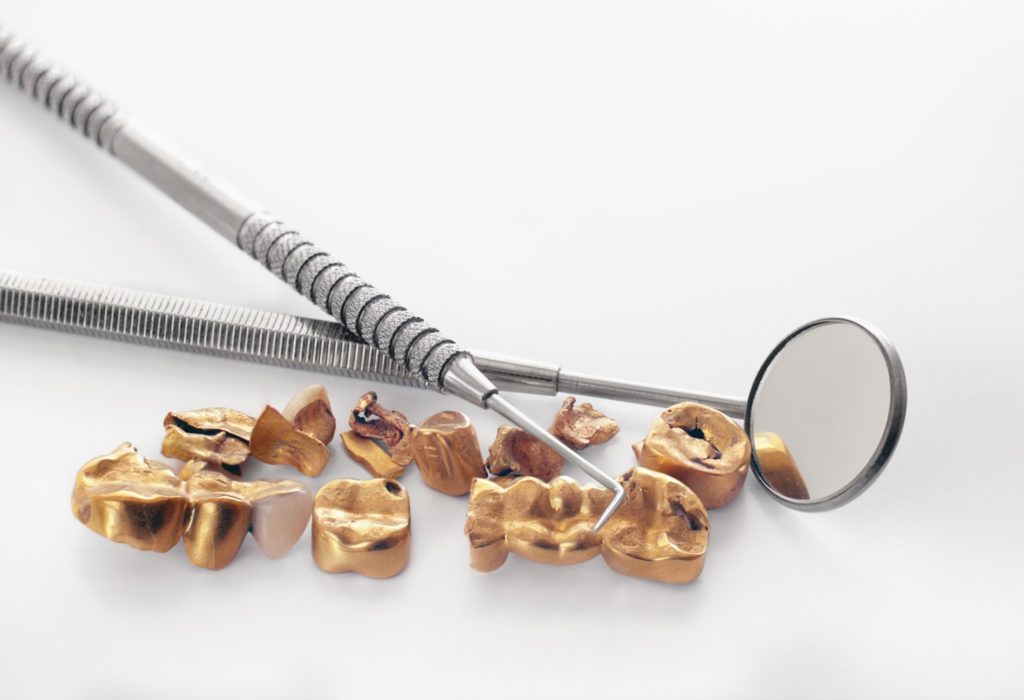
Dental scrap metal refining is popular for a reason. Americans are consistently having cavities filled, along with crowns other various types of metal inserted into their mouths during oral procedures and surgeries. The majority of these problems are discovered by dental x-rays.
Dr. Elizabeth Claus, a neurosurgeon at Brigham and Women’s Hospital (BWH) in Boston and head researcher of the study, is quick to point out that her findings do not refer to the dental x-rays taken today. Contemporary dental x-rays use much lower levels of radiation; not enough to have any negative impact on one’s likelihood of being diagnosed with a brain tumor.
For the study, Claus and her colleagues examined 1,433 patients between the ages of 20 and 70 that were diagnosed with meningioma between May 2006 and April 2011. They compared this data to 1,350 matched controls. The results revealed that participants with meningioma were more likely to have undergone a specific type of dental x-ray called a “bitewing,” which is usually given annually and provides a dentist with a view of crowns of the upper and lower teeth at the same time.
Those participants who had the bitewing x-rays at least once a year were almost twice as likely to develop meningioma when compared to the controls. Similarly, the panorex x-ray (one which shows the upper and lower jaws, as well as the teeth in the same film) put patients at an even higher risk for contracting meningioma later in life. The results of this research are preliminary, and further research is being done on the risks of brain cancer from dental x-rays.
If you have metal in your mouth, chances are you’ve undergone one of these x-ray procedures. The popularity of scrap metal refining, especially of the dental variety is increasing. By selling your dental scrap to Cash for Dental Scrap you can make a pretty penny off the precious metal in your mouth. And, it’s important to remember, the dental x-rays of today are safer than they have ever been. So, don’t fear, by investigating the problems in your mouth you won’t be putting your brain at risk for its own set of problems.
March 20, 2012
Dentistry is a vital profession, but sadly, the majority of dentists are unsung heroes. Dentists keep their clients teeth clean and healthy, protecting them from decay and tooth loss. They also protect them from oral bacterial infections that can lead to conditions that will seriously detract from your quality of life. Bleeding gums are common in people who neglect their dental hygiene, but many people who have bleeding gums are unaware of just how hazardous they can be to their overall health. Poor dental hygiene causes an overgrowth of bacteria in the mouth, and bleeding gums give that bacteria access to your bloodstream, which can put you at risk for heart disease and stroke.
Though dental hygiene is a key part of your overall health, it is commonly neglected. Doctors and surgeons have long been seen as heroes in our society, but due to the pain associated with dental care, most people loathe going to the dentist, and dentists rarely receive the credit they deserve. It is widely recommended that people should see a dentist twice a year, for deep cleaning and a check up, but many people go far less than that, as they are working under the assumption that their oral health is not as important as their overall health. The widespread negligence of dental health means that when many people do finally get to the dentist they often require extensive dental work that could have been avoided had they gone sooner.
It can be frustrating to be a dentist and have your accomplishments often go unappreciated, but dentists can make a surprising amount of extra cash off their clients’ neglect. People with persistent dental problems require extensive work throughout their lifetimes, and those crowns, bridges, and caps are often made of valuable precious metals. When teeth containing dental gold, silver, or platinum are extracted from patients, they often look so unsightly that they choose not to keep them, but precious metals are worth significant amounts of money, even when they are mangled or still attached to teeth.
Dentists often accumulate a significant amount of dental scrap, and with the high market prices of gold, silver, and platinum, they can make some serious cash. Dental scrap often contains quite a lot of gold or other precious metals, because dental implants are made to span gaps in the jaw, and less valuable metals are not safe for use in the mouth. If you have dental gold to sell, Cash for Dental Scrap is the perfect place to turn your scrap into cash. Simply request a free scrap-pak online, mail us your scrap, and sit back and wait for your check. At Cash for Dental Scrap, we make it easy for you to cash in on your dental gold, and satisfaction is always guaranteed.
March 13, 2012
Gold has been used in dentistry since the 18th century, but recent advancements in dental technology have revealed cheaper and more effective alternatives for dental restorations. While crowns, fillings, bridges and implants were most commonly made out of gold in the past, gold is distinctively colored and stands out amidst rows of otherwise white teeth. Many people with gold dental restorations are now opting to replace their gold teeth or fillings with porcelain, which is equally effective, but significantly cheaper and more subtle.
If you’re looking to replace your gold dental restorations with ceramics, you can cash in big on your dental scrap. The gold that is used in dental restorations is extremely high quality, and if you have extensive dental work, you can make a lot of cash off your dental scrap gold. The market price of gold is reaching record prices, so dental gold is now more valuable than ever. Cash for Dental Scrap offers dental scrap refining for dental scrap from any type of restoration. Even if your dental scrap gold is old, tarnished, or mangled, Cash for Dental Scrap’s risk free service will give you the best price for your gold; satisfaction guaranteed.
The widespread use of high quality gold in dental restorations gives you many more opportunities to cash in on dental scrap. The high price of gold crowns, bridges, and teeth has prompted many people to leave them to relatives in their wills. While inherited jewelry is usually either worn or sold, many people are unsure of what to do with their relatives’ old dental scrap. You may find that you have old gold teeth or bridges belonging to dead relatives just hanging around your house and trading them in for cash can be surprisingly lucrative. Some people even sell old dental scrap for cheap at estate sales or flea markets, and if you have a good eye you can make a big profit with minimal effort.
At Cash for Dental Scrap we make it easy for you to cash in on old gold and silver dental restorations. Simply request your free scrap-pak online and we’ll send you an envelope to ship us your dental scrap. Our shipping is prepaid and insured, so you can trade in your dental scrap with no cost or risk. Our dental scrap refining experts will appraise your scrap, and we’ll mail you a check within 24 hours of receiving it. Not satisfied with the amount of your check? No problem! We have a 100% satisfaction guarantee, and we’ll return your material promptly at no cost to you. If you’re upgrading your dental work or have old dental scrap lying around, don’t just let it gather dust. At Cash for Dental Scrap, we offer you premium prices for your old dental scrap, and make it easy for you to turn old junk into cold, hard cash.
November 18, 2011
The holidays and a recession are a bad combination for many people. The holidays call for spending, but a recession means that a lot of people just aren’t going to have the money this year. But there is a ready source of cash that many people may not realize they have — dental scrap gold — and we are not just talking about selling gold teeth. There is gold in a variety of dental appliances including bridges, crowns, inlays, onlays, and partials. Dental gold is a potential gold mine that many people have not considered. Read more
November 17, 2011
With the holidays coming around, many Americans are finding themselves unprepared for the expenses that are associated with the holiday season. Unfortunately, despite ample time, the economy is yet to recover, and the majority of the burden presented by the global economic downturn rests on the shoulders of everyday Americans. Even dentists, who are often mislabeled as being collectively wealthy, are struggling to pay the bills. With many struggling to meet monthly expenses, is one to simply forget tradition? Save the holidays for next year? Read more
Fill out this Form to Receive A